Your class is the biggest choice you make in Dungeons and Dragons because it defines what your character actually does in play. A race and background shape the story, but your class sets your main tools, your role in the party, and how you solve problems.
This DnD class guide breaks down the official DnD class list for DnD 5e into quick, practical overviews. You’ll find short descriptions, plus strengths and weaknesses, so you can choose a class that fits how you want to play.
One useful way to think about roles is the old “core capabilities” idea: healing/support, front-line fighting, skills/scouting, and big spellcasting. You don’t need a perfect template, but it helps if your group can cover those basics between you.
The Official, Core Classes in DnD 5e
There are 13 official classes in DnD 5e, and each one plays differently.
Artificer

Artificers are all about creating magic items (often temporary) and leaning into deep customisation, mixing practical tools with spellcasting. They’re flexible and can be built for several roles, but they ask you to track more moving parts than most classes.
Strengths: excellent with tools, extremely durable, supports multiple play styles.
Weakness: complex resource management.
Barbarian
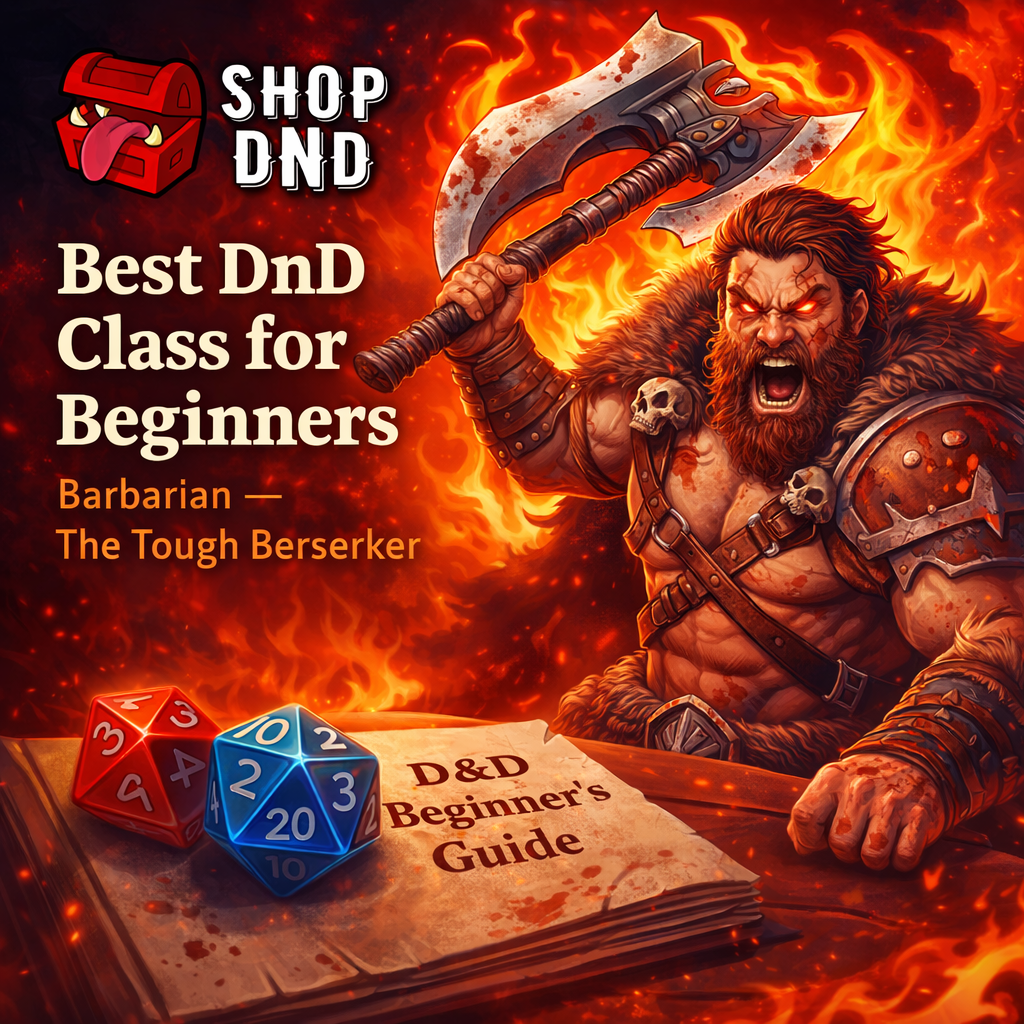
Barbarians are classic melee bruisers: lots of hit points, resistance to common damage types, and a focus on big weapons and repeatable tactics. Rage is the centre of the class, making you very hard to put down in a few key fights per day
Strengths: high-risk, high-reward play; excellent melee combat.
Weaknesses: struggles at range; poor skills.
Bard
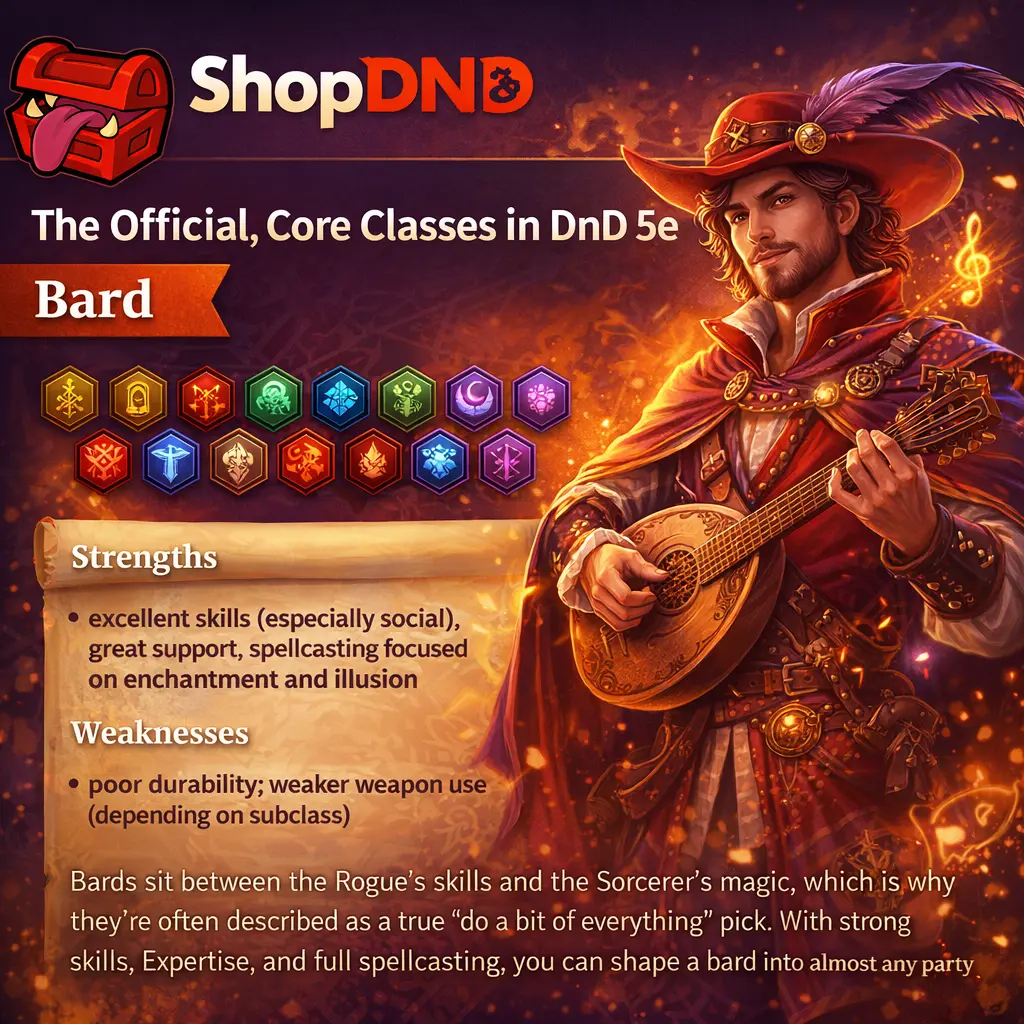
Bards sit between the Rogue’s skills and the Sorcerer’s magic, which is why they’re often described as a true “do a bit of everything” pick. With strong skills, Expertise, and full spellcasting, you can shape a bard into almost any party role.
Strengths: excellent skills (especially social), great support, spellcasting focused on enchantment and illusion.
Weaknesses: poor durability; weaker weapon use (depending on subclass).
Cleric
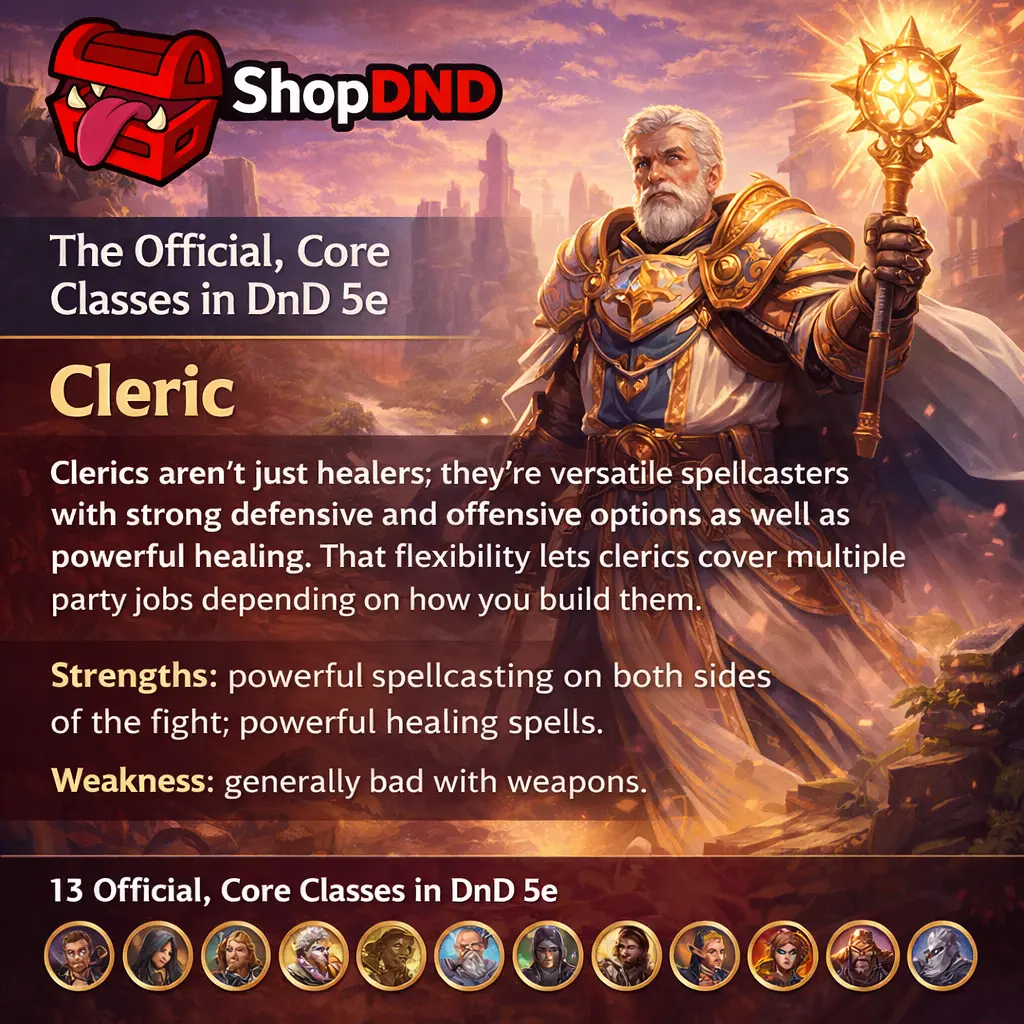
Clerics aren’t just healers; they’re versatile spellcasters with strong defensive and offensive options as well as powerful healing. That flexibility lets clerics cover multiple party jobs depending on how you build them.
Strengths: powerful spellcasting on both sides of the fight; powerful healing spells.
Weakness: generally bad with weapons.
Druid
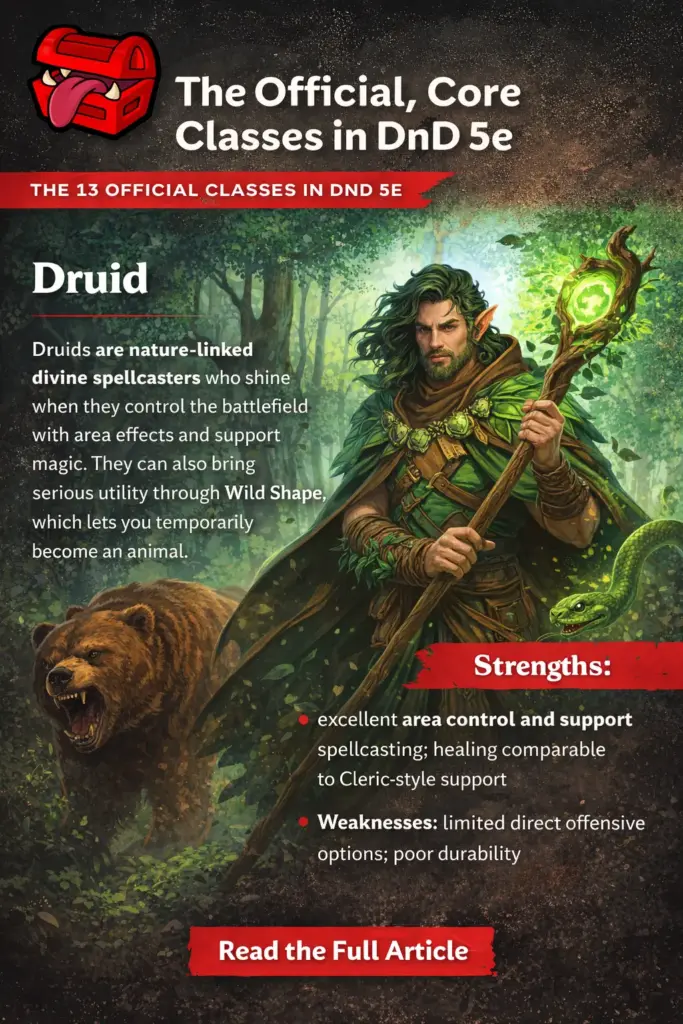
Druids are nature-linked divine spellcasters who shine when they control the battlefield with area effects and support magic. They can also bring serious utility through Wild Shape, which lets you temporarily become an animal.
Strengths: excellent area control and support spellcasting; healing comparable to Cleric-style support.
Weaknesses: limited direct offensive options; poor durability.
Fighter
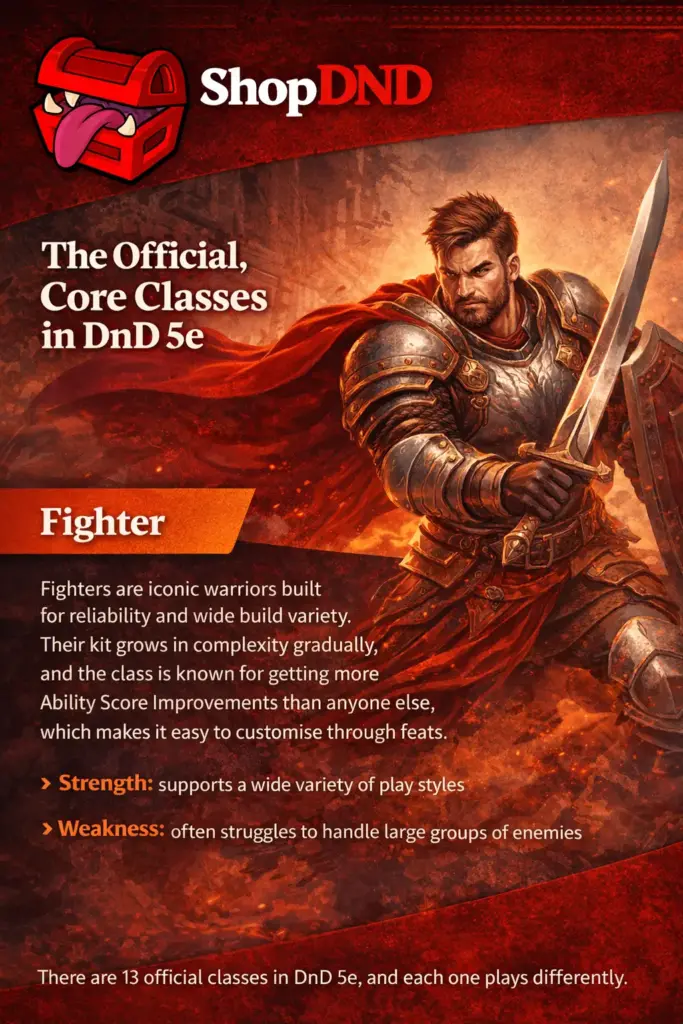
Fighters are iconic warriors built for reliability and wide build variety. Their kit grows in complexity gradually, and the class is known for getting more Ability Score Improvements than anyone else, which makes it easy to customise through feats.
Strength: supports a wide variety of play styles.
Weakness: often struggles to handle large groups of enemies.
Monk
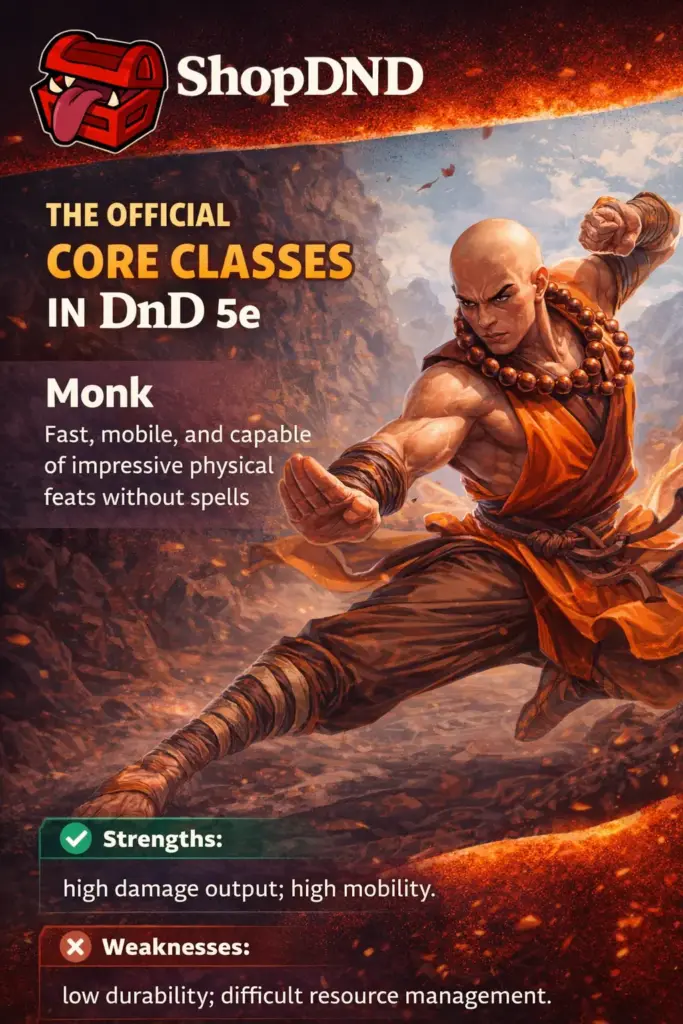
The DnD monk class is the signature unarmed hero: fast, mobile, and capable of impressive physical feats without relying on spells. It’s a complex class to build well, and it can feel restrictive because many monk builds end up looking similar if you want to keep pace.
Strengths: high damage output; high mobility.
Weaknesses: low durability; difficult resource management.
Paladin
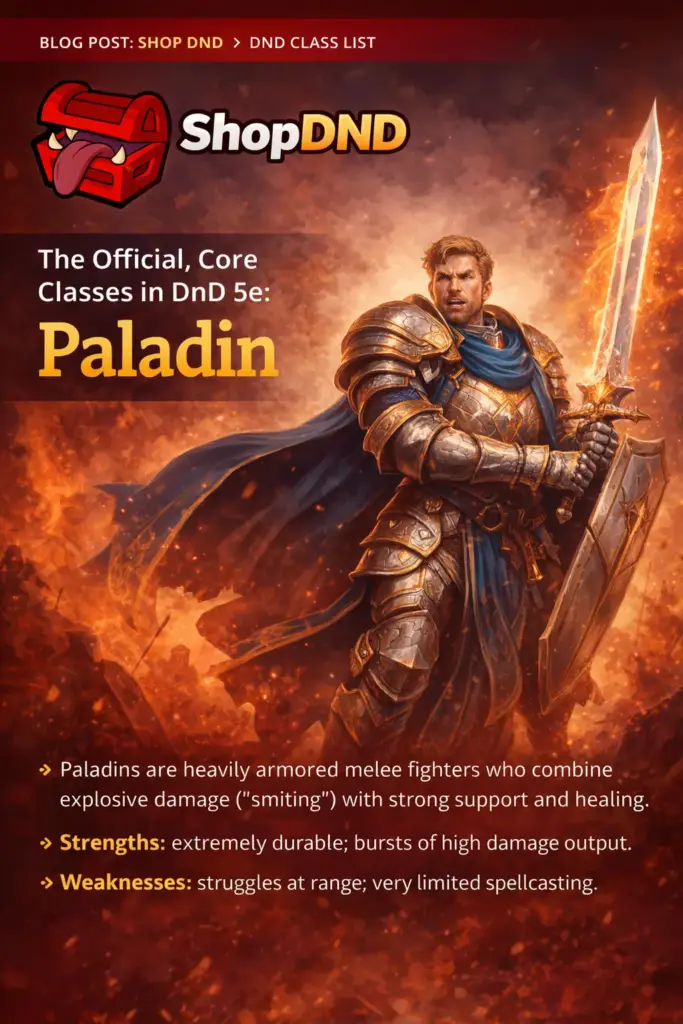
Paladins are usually heavily armoured melee fighters who combine explosive damage (“smiting”) with strong support and healing. They also lean on Charisma, which can make them better in social scenes than many other front-line warriors.
Strengths: extremely durable; bursts of high damage output.
Weaknesses: struggles at range; very limited spellcasting.
Ranger
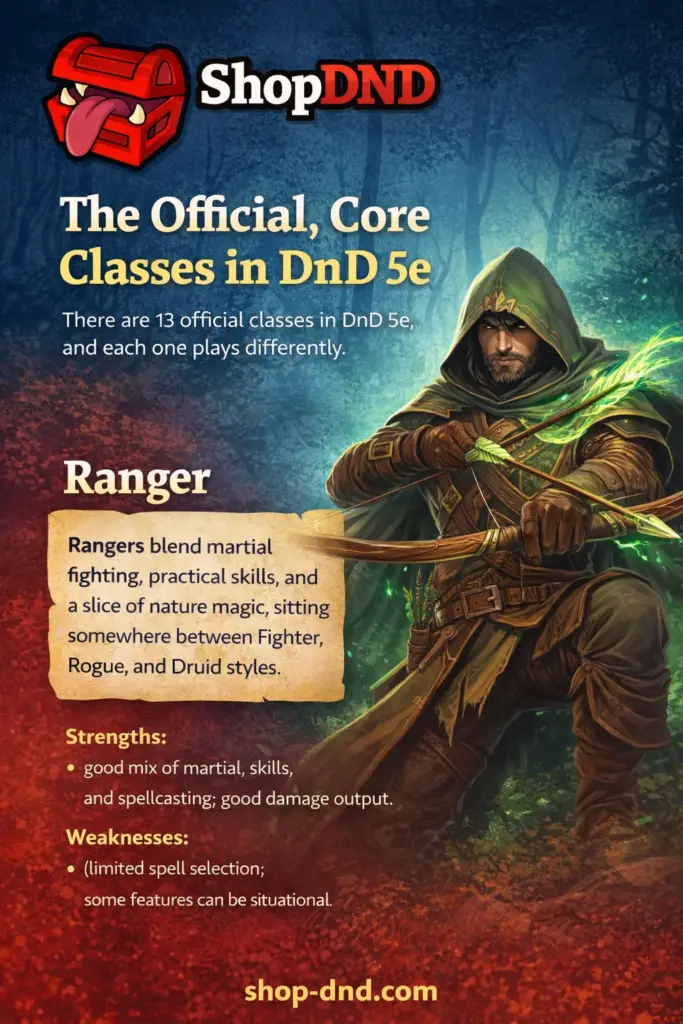
Rangers blend martial fighting, practical skills, and a slice of nature magic, sitting somewhere between Fighter, Rogue, and Druid styles. The class has also benefited from optional features and newer subclass design, which helps it feel more consistently useful.
Strengths: good mix of martial, skills, and spellcasting; good damage output.
Weaknesses: limited spell selection; some features can be situational.
Rogue
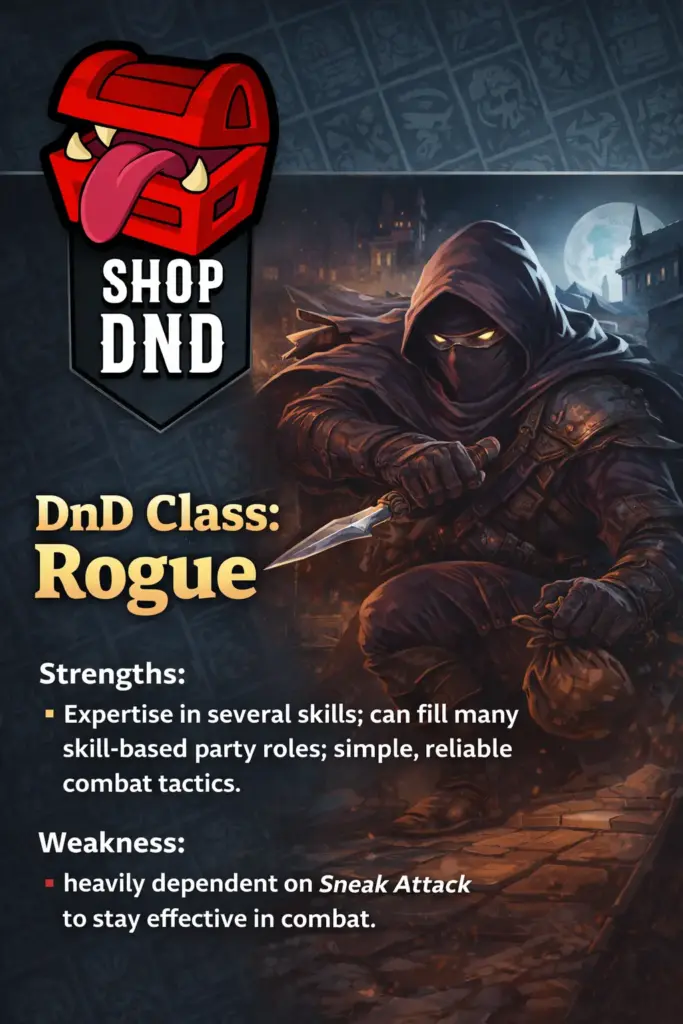
The rogue class in DnD is a high-skill problem-solver, and it’s not limited to the “thief” stereotype. In combat, the class centres on Sneak Attack, rewarding positioning, stealth, and smart tactics for big single hits.
Strengths: Expertise in several skills; can fill many skill-based party roles; simple, reliable combat tactics.
Weakness: heavily dependent on Sneak Attack to stay effective in combat.
Sorcerer
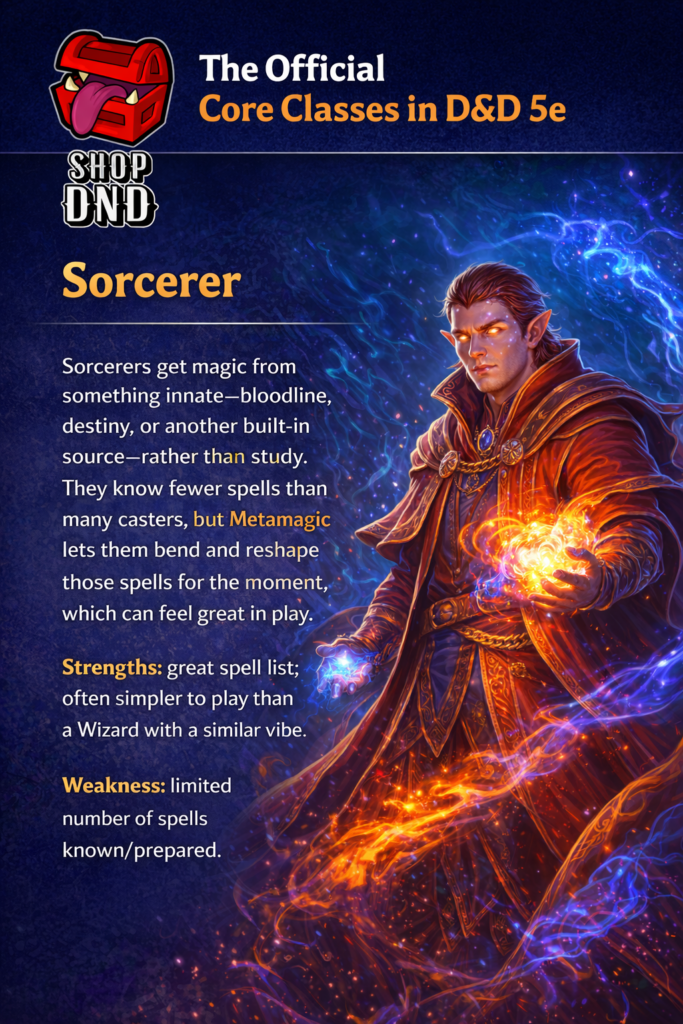
Sorcerers get magic from something innate—bloodline, destiny, or another built-in source—rather than study. They know fewer spells than many casters, but Metamagic lets them bend and reshape those spells for the moment, which can feel great in play.
Strengths: great spell list; often simpler to play than a Wizard with a similar vibe.
Weakness: limited number of spells known/prepared.
Warlock
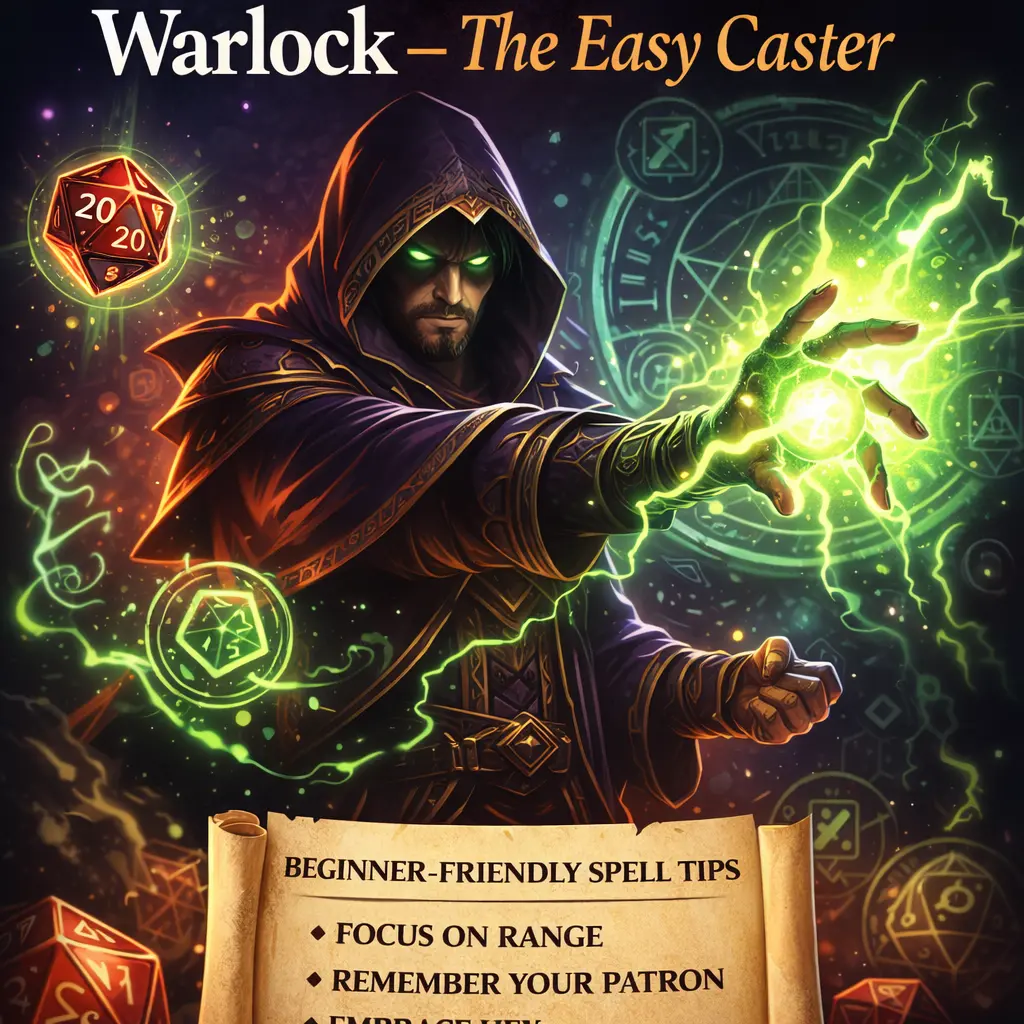
Warlocks draw power from a pact with a powerful entity, and they play differently from most spellcasters because of their unique “pact magic” approach. Many builds lean on Eldritch Blast because it’s consistently strong, but the class also has a lot of customisation points through Invocations.
Strengths: access to Eldritch Blast; simpler spellcasting than many casters; diverse play styles.
Weakness: very few spell slots.
Wizard

The DnD wizard class is the iconic spellbook scholar, known for the biggest spell list and strong utility through rituals and collected spells. Wizards can be spectacularly powerful, but they are also fragile and need smart positioning and planning.
Strengths: expansive spell list; powerful ritual casting.
Weaknesses: low hit points; no armour.
Explore The World Of DnD Character Merch With Us!
Want to wear your class energy off the table? Shop DnD is design-first: choose the artwork you love, then pick the garment that suits you.
Browse our full range of DnD clothing designs and build your party’s look without everyone matching the same tee.
Before you checkout, use our size guide to find your fit.

Frequently Asked Questions
The official set includes Artificer, Barbarian, Bard, Cleric, Druid, Fighter, Monk, Paladin, Ranger, Rogue, Sorcerer, Warlock, and Wizard.
If you mean “tanky” as in durable and happy on the front line, Paladin is explicitly described as extremely durable, and Barbarian is built around high hit points plus Rage-based durability. Artificer can also be extremely durable, depending on build, but it comes with more complex resource management.
It can be, mainly because Wizards have low hit points and no armour, even though they’re powerful thanks to an expansive spell list and ritual casting. If you enjoy planning and learning spells, it’s very rewarding, but you’ll want to play carefully.
The core combat engine is Sneak Attack, which pushes you to use positioning, stealth, and tactics to land powerful single hits. That same focus is also why rogue combat can feel simple and reliable once you understand how to set it up.
Monks lean into speed, mobility, and fighting effectively without weapons or armour, doing impressive physical feats without spells. The trade-off is lower durability and more demanding resource management compared with many other front-liners.
Final Thoughts
Picking from the DnD class list is easier when you focus on what you want to do most sessions: lead from the front, support the team, solve problems with skills, or shape the fight with magic. Your class choice sets the tone of your character, and it also helps your party understand what you bring to the table.
If you’re stuck, start with the play experience you want, then choose the class whose strengths match that idea (and whose weaknesses you’re happy to manage). That approach is usually more useful than chasing a “best” class on paper.