Starting Dungeons & Dragons can feel overwhelming – there are so many character classes to choose from! New players usually do best with simple, forgiving options. In this guide, we’ll answer “What is the best DND class for beginners?” and highlight our top picks. These classes are easy to learn and fun to play, so that you can jump into your first adventure without stress.
Top Beginner-Friendly DND Classes
- Fighter – A classic warrior with straightforward combat and plenty of safety nets.
- Barbarian – High hit points and the simple Rage ability make combat easy.
- Paladin – A heavy-armoured champion who fights and heals with simple spells.
- Rogue – A sneaky striker who deals bonus damage with basic tactics.
- Ranger – An archer or hunter with easy ranged attacks and useful nature skills.
- Warlock – An entry-level spellcaster with very limited spells and a powerful cantrip.
- Wizard – If you love magic, this is the “easiest” full spellcaster to learn.
Each of the classes above has mechanics that new players can pick up quickly. Below, we’ll explain why these are great first choices and link to our own Shop DnD store for gear that fits your new hero.
Fighter – The Classic Champion
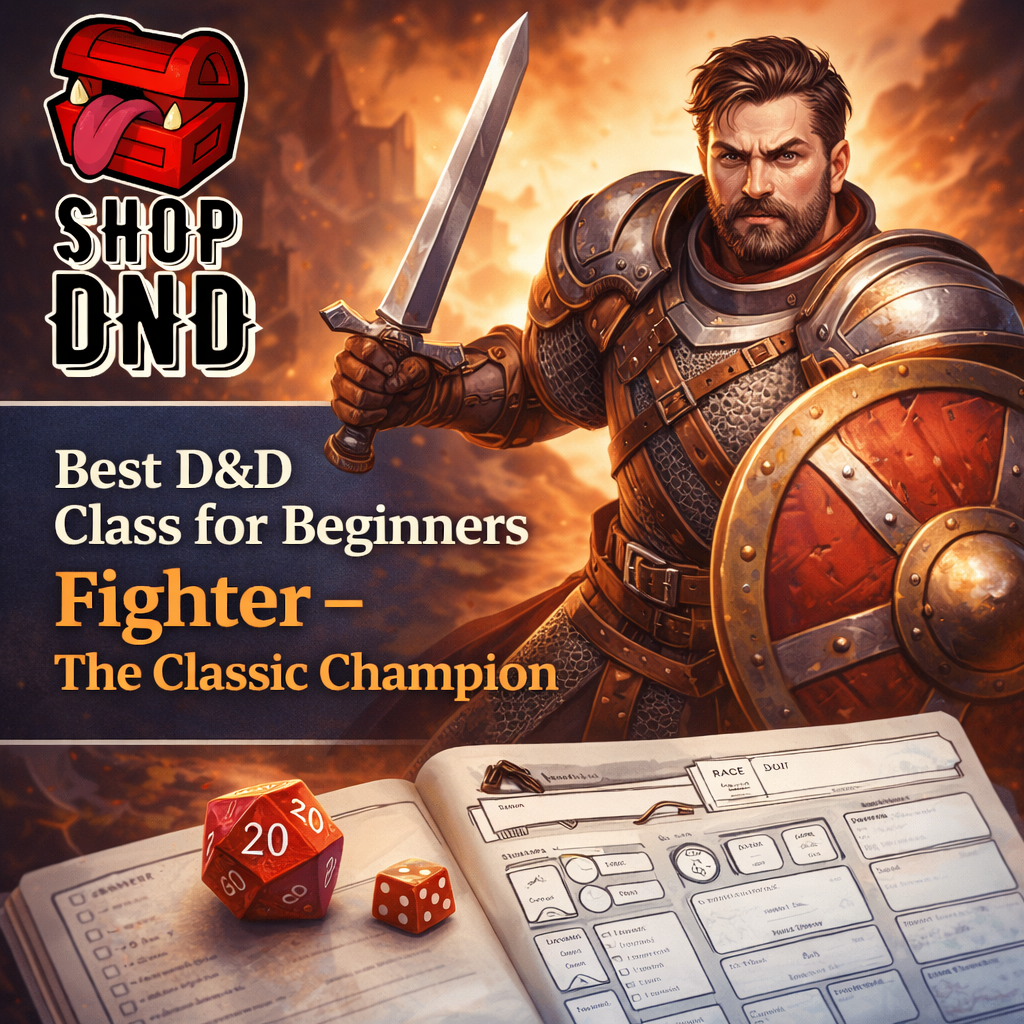
| The Fighter is often called the most beginner-friendly DND class. It’s the archetypal warrior: you just pick a weapon or shield and start rolling dice to attack. There are no tricky spells to remember – combat is mostly “roll to hit and deal damage.” Even so, Fighters stay interesting at higher levels. They get abilities like Second Wind and Indomitable that let you heal or retry failed rolls, which act as forgiving “safety nets” if you make a mistake. In short, Fighters let you look heroic with very little learning curve. |
Key Benefits:
- Easy combat: Simple weapon attacks (no complex spells).
- Resilience: Lots of hit points (10 + Constitution at 1st level) and abilities to recover HP.
- Safety features: Second Wind, Action Surge and Indomitable let you bounce back from a bad turn.
- Flexibility: You can be a knight, soldier or wandering mercenary – whatever fits your character concept.
Fighters can wear heavy armour and use a wide array of weapons, so they suit any playstyle. If you’re an absolute newbie, starting with a Fighter means you can focus on the basics of rolling dice and hit points, learning the rules as you go.
Barbarian – The Tough Berserker
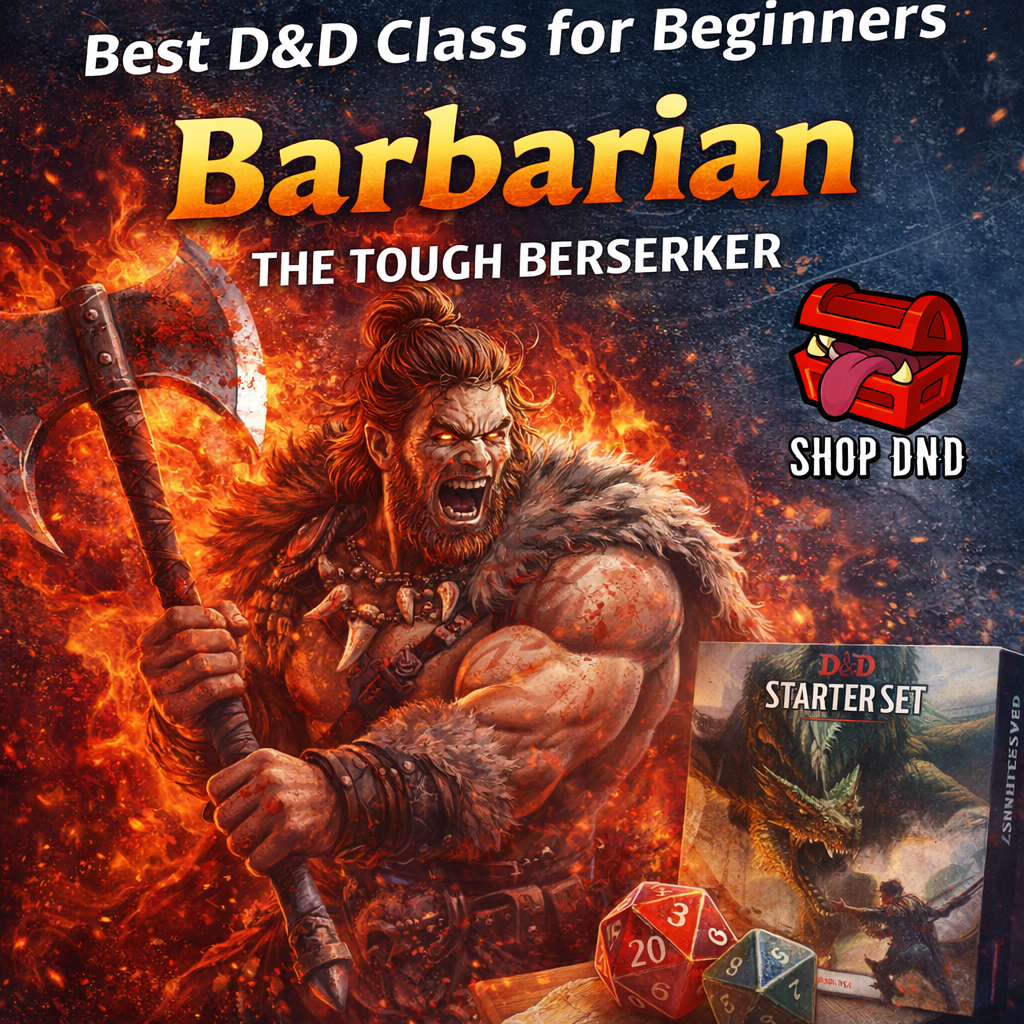
The Barbarian is the best D&D class for any beginner – easy to learn, mechanically light, and provides a powerful way to engage in combat without fear of dying. Barbarians have the highest potential hit points in the game (starting at 12 + Constitution modifier), which means your character can shrug off hits easily.
They also have Rage, a super-simple ability: you enter a battle rage and deal extra damage while taking less damage in return. This straightforward boost is hard to mess up.
Why Barbarian Rocks:
- Huge hit points: Starts with 1d12 hit die (12 + Con mod at 1st level), so you survive lots of hits.
- Simple rage power: Rage gives strength and durability boosts that are very intuitive – great for smashing enemies or soaking damage.
- Forgiving play: Because you have so much health and multiple rages, you can experiment without worrying about dying.
- Fun character flavour: Play as a Viking, berserker, or wild warrior – and look cool doing it.
If you love the idea of just swinging a big axe or maul and being hard to kill, the Barbarian lets you do that from level 1. It’s hard to go wrong with this straightforward “hit things until they die” playstyle.
Paladin – The Holy Warrior
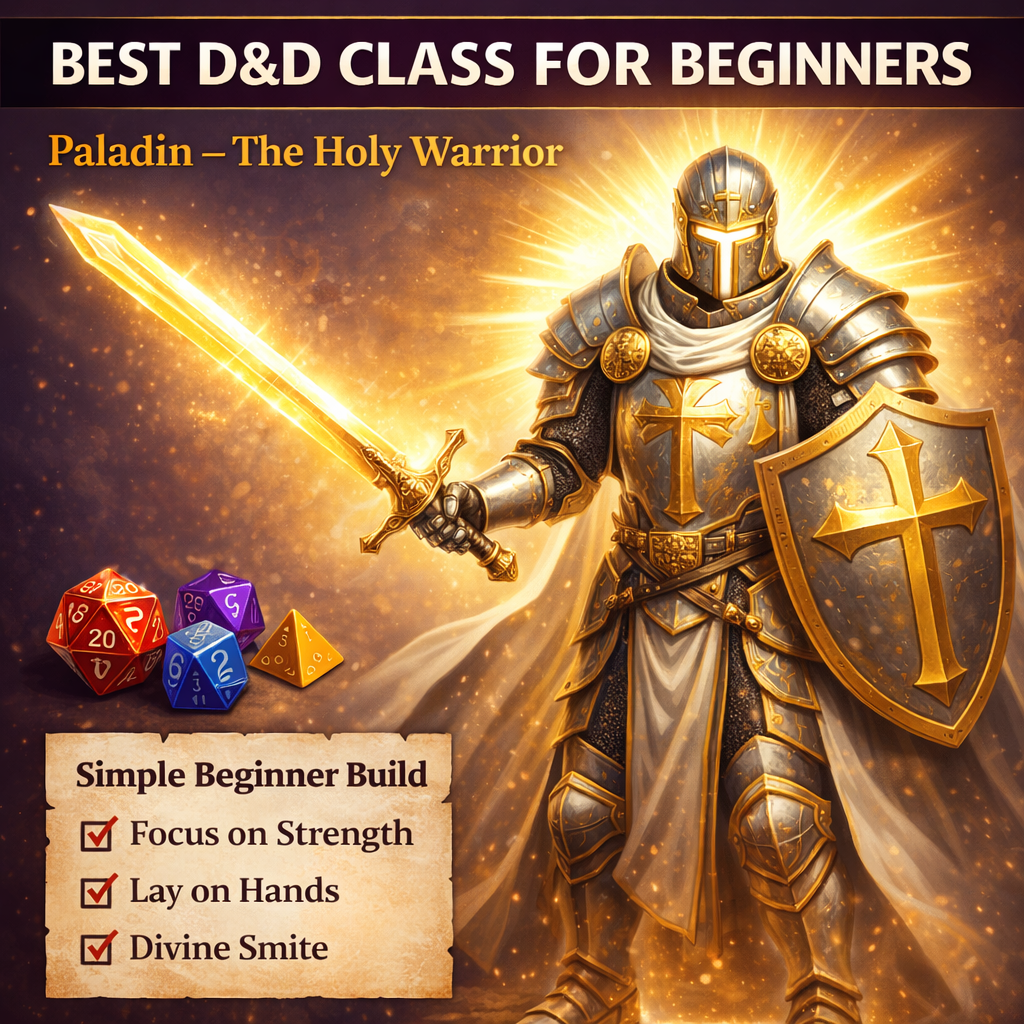
The Paladin mixes solid melee combat with a touch of spellcasting and healing. New players like Paladins because they can put on heavy armour and just fight, yet also do a bit of support. Paladins have fewer spells than a full caster, so you don’t need to worry about memorising dozens of magic.
Most of the time you’ll swing a sword or axe and you can even Smite enemies for huge extra damage by burning a spell slot. You also get healing spells and buffs, which lets you help the party without complex tactics.
Why Pick Paladin:
- Armoured fighter: Can wear heavy armour and use shields, so you’re very durable.
- Divine Smite: Spend a spell slot to add radiant damage to your attacks – a simple but powerful effect.
- Support spells: You learn basic healing or buff spells, giving you extra utility (healing or protecting allies) without overwhelming you.
- Role-playing fun: Paladins follow a code or deity, so new players can play noble knights or crusaders easily.
Paladins start with 10 + Constitution hit points at 1st level, same as Fighters, so they can take hits well. The mix of swordplay and a little magic is forgiving; you’re never solely dependent on spells unlike pure Wizards or Clerics, and your spells mostly enhance your fighter abilities.
For beginners, that means an exciting hybrid that teaches both melee and magical basics in manageable chunks.
Rogue – The Sneaky Striker
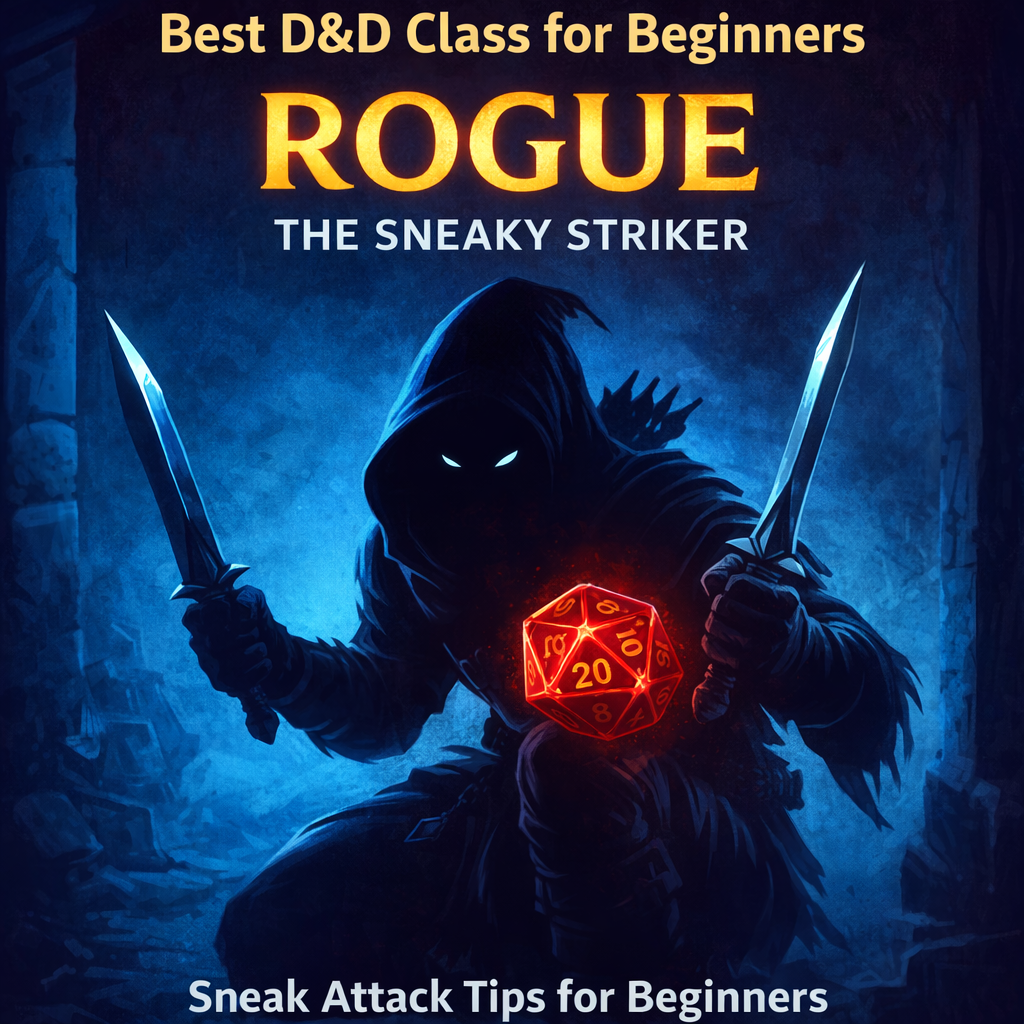
The Rogue offers a very different style: stealth, cunning and precision. At the start, a Rogue’s main class feature is Sneak Attack, which lets you deal extra damage when you have the advantage. This requires paying a bit of attention – you want to attack from hiding or hit enemies alongside your allies to trigger it.
That’s a mild learning curve, but it becomes fun quickly. Once you grasp Sneak Attack, the Rogue’s gameplay is straightforward: you usually hide or move for position, then make a weapon attack.
Rogue Highlights:
- Sneak Attack: Deals bonus damage if positioned correctly (often behind enemies or when teammates distract them). Encourages teamwork.
- Stealth & Skills: Rogues are great at sneaking and thievery, so you get to use skills like Stealth and Thieves’ Tools. This makes you feel clever without heavy rules overhead.
- Cunning Action: Starting at 2nd level, you can dash or hide as a bonus action, which is very handy and easy to understand.
- Light armour and hit points: Rogues have 1d8 hit points (so not as much as Fighters) but wearing leather or studded leather keeps things simple.
If you enjoy games where you pick your shots and avoid the front lines, Rogue is very rewarding. The extra damage mechanic means even if you miss a turn, it’s often not a big deal next round when you strike from surprise.
It takes a tiny bit of practise to use Sneak Attack optimally, but many new players find stealthy characters intuitive – you’re basically learning positioning and advantage, which are core D&D concepts.
Ranger – The Nature Hunter
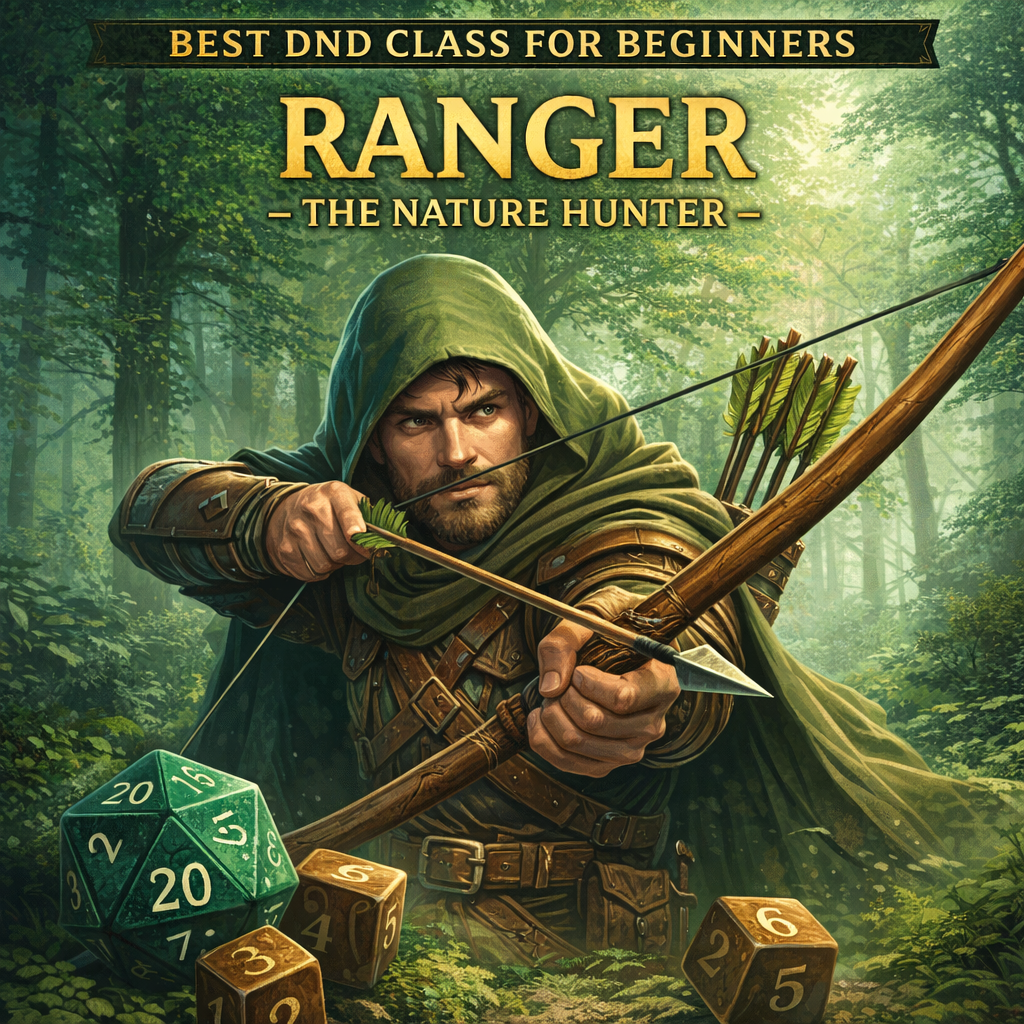
The Ranger is also one of the best DND classes for beginners who like ranged combat or a wilderness vibe. Early on, a Ranger mostly just attacks with a bow or dual-wields and moves around the battlefield. You also get a few spells like Hunter’s Mark, which adds bonus damage to your target – a straightforward buff.
Plus, you choose a Fighting Style at level 2 (options like Archery for +1 to ranged attacks), which is easy to use.
Why Rangers are Friendly to Newbies:
- Simple ranged attacks: Early gameplay is mostly “shoot arrows” or swing weapons if up close – no complex spells until later.
- Animal companion (optional): If you pick the Beast Master archetype, you get a pet ally (fun, but not required for a basic build).
- Survival theme: Rangers use skills like Perception and Survival, which can immerse new players in the game world (tracking monsters, exploring forests).
- Flexible style: You can flavour yourself as a forest guardian, tribal hunter, or even a modern “outlander” without worrying about heavy magic.
Rangers do have some spellcasting, but the spells they pick at low levels are mostly buffs or nature-themed, like Speak with Animals. Even if you never use a spell, you can still contribute every turn.
For example, concentrating on Hunter’s Mark and just shooting is a simple tactic. This gradual introduction to spells (only a few at a time) makes Ranger less intimidating than other casters. It’s a safe middle ground: more complex than Fighter but still pretty easy to pick up.
Warlock – The Easy Caster
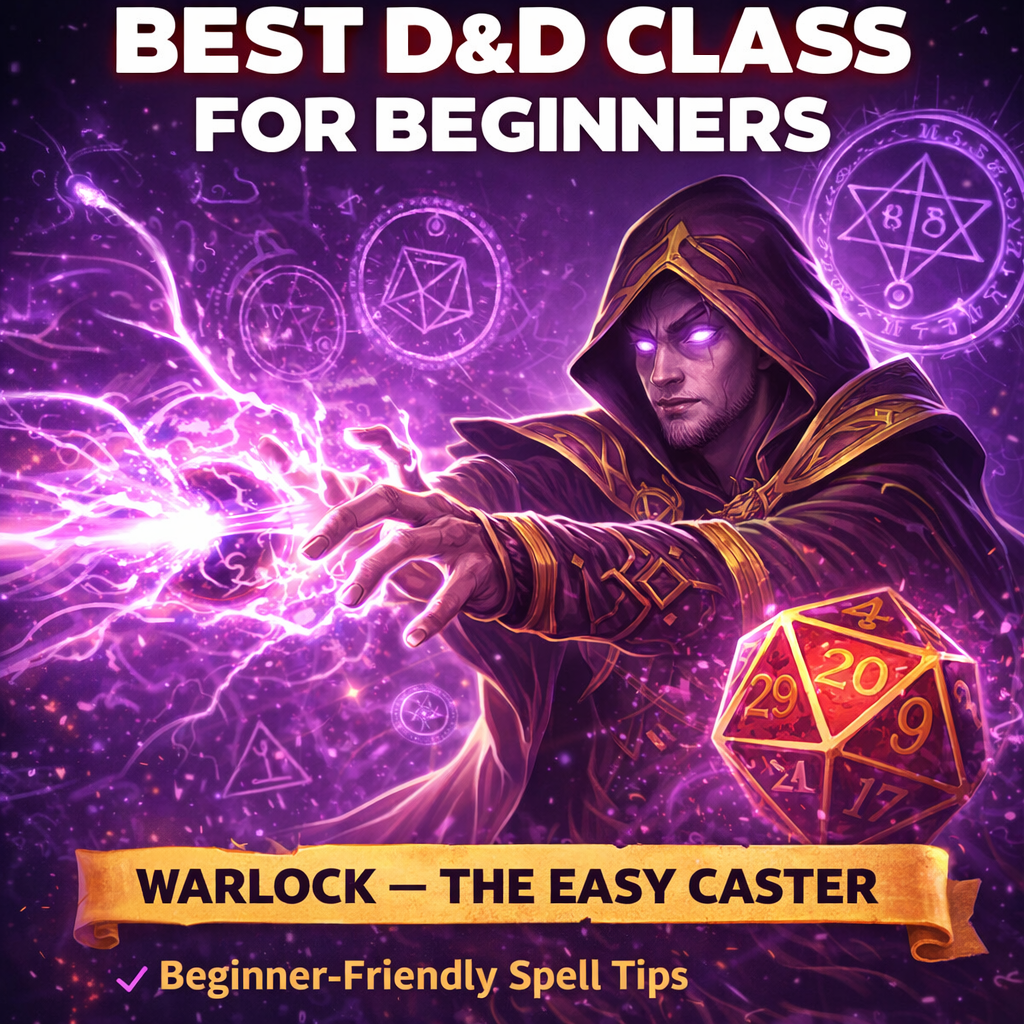
If you really want to try magic, Warlock is one of the simplest casters. In fact, Warlock is the best D&D class for spellcasting beginners. Here’s why: at the 1st level, a Warlock only has two spell slots (the lowest level), and those slots refresh on a short rest. That means you don’t have to juggle a big spellbook or worry about running out of magic during an adventuring day. Also, your bread-and-butter attack is the Eldritch Blast cantrip – a ranged damage spell you can use freely without expending a slot.
Warlock Perks:
- Very limited spells: Only a couple of spells to pick and cast, so you can memorise and use them easily.
- Short-rest recharge: Spell slots come back after a short rest, so you’re rarely left helpless without magic.
- Eldritch Blast: A cantrip that you cast every turn; it scales with level and lets you always deal damage (no need to conserve resources).
- Roleplay hook: Warlocks make a pact with a powerful being (patron), which can lead to fun character stories without adding gameplay complexity.
Warlocks use Charisma for their magic, and they wear light armour, meaning you still have decent defence. Because there are so few spells, you learn them all at character creation and don’t have to manage a big list.
This makes Warlock feel more like a simple hybrid of fighter and spellcaster. If you’re curious about D&D magic but not ready for a full-blown Wizard, Warlock is a very friendly way to start.
Wizard – Simple Spellslinger

Finally, if you truly want maximum magic from day one, Wizard is often recommended as the least complicated full caster for new players. Wizards have the largest spell list, but the basic rules for casting are logical (choose a spell you prepared, make an attack or saving throw, etc.).
Wizards are the mechanically least complicated spellcasting class to learn. Playing a Wizard is the easiest and fastest way for new players to learn how spellcasting works. In practice, many DMs allow beginners to pick a handful of low-level offensive or utility spells like Magic Missile or Shield and focus on using those in combat or puzzle-solving.
Why Wizard Can Work:
- Straightforward casting: Once you have your spells, it’s mostly step-by-step (cast, apply effects).
- High reward spells: Even a single hit with a good spell like Fireball at 5th level feels awesome, giving beginner players a sense of power.
- Creative play: Wizards can do things others can’t, like fly, enchant, detect magic, teleport, etc., which is exciting for new players who enjoy imaginative solutions.
- Learning the system: Managing a Wizard teaches you the magic rules early, so you grow with the game’s most complex class.
That being said, Wizards also have the lowest hit points and fewer hit-die, so they’re fragile. If you play one, you’ll want to hang back and use your fellow heroes to protect you.
But many new players who love the fantasy of “casting spells every turn” start as a Wizard because of that immediate satisfaction. Just remember to be cautious and read the spell descriptions (a good DM will help!).
Gear Up and Join the Adventure!
By choosing one of the classes above, you’ll have a smoother first experience in Dungeons & Dragons. Each offers a mix of fun and simplicity that helps new players learn the ropes. And remember, once you’ve picked your class, gear up with some cool D&D apparel!
At Shop DnD, all our clothing is unisex, from t-shirts to hoodies, so you can wear your fandom with pride. We deliver worldwide, check our delivery info for shipping details, and you can browse all our designs on our online store.
Now that you know which DND classes are the best and easiest for beginners, go roll those dice with confidence. Welcome to the game, and may your first character become a legendary hero or at least have fun trying!